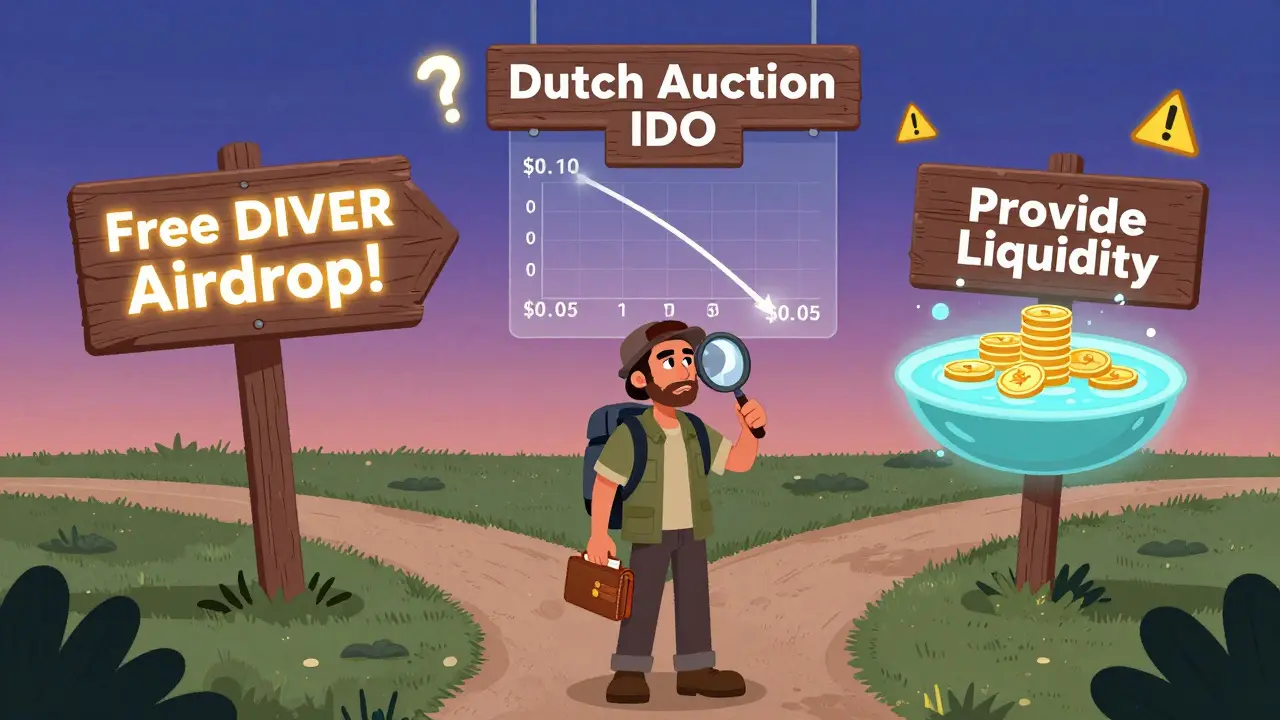
There’s a lot of noise online about a Divergence airdrop. You’ve seen the tweets, the Discord posts, the Telegram groups promising free DIVER tokens if you just sign up, connect your wallet, or share a post. But here’s the truth: Divergence never ran a traditional airdrop. Not one. Not even close.
If you’re hoping to get free DIVER tokens like you did with Solana or Arbitrum airdrops, you’re chasing a ghost. The project didn’t hand out tokens to random wallets. It didn’t use a snapshot of holders. It didn’t reward early testers with free coins. Instead, it did something far more intentional - and far less flashy.
How DIVER Tokens Were Actually Distributed
Divergence didn’t do an airdrop. It did an IDO - an Initial DEX Offering - using a Dutch auction. That means the price started high and dropped over time until all tokens sold out. The auction began at $0.10 per DIVER token, with a total of 20 million tokens up for grabs. The floor price was $0.05. This wasn’t a giveaway. It was a market-driven sale open to anyone with Ethereum or compatible wallets.
People who bought in during the auction got their tokens at whatever price they bid. Those who waited too long paid more. Those who jumped early paid less. No one got them for free. No one was selected by a lottery. No one got extra tokens for referring friends. It was a clean, transparent, permissionless sale. That’s it.
After the auction closed, the majority of the tokens and proceeds went straight into a SushiSwap liquidity pool. That’s where DIVER is traded today. The team kept the rest for future listings and liquidity events. So if you’re seeing DIVER trading at $0.010686 right now, that’s because the market decided it’s worth less than the original auction price. That’s normal. It’s not a crash. It’s just how markets work.
So Where Did the ‘Airdrop’ Myth Come From?
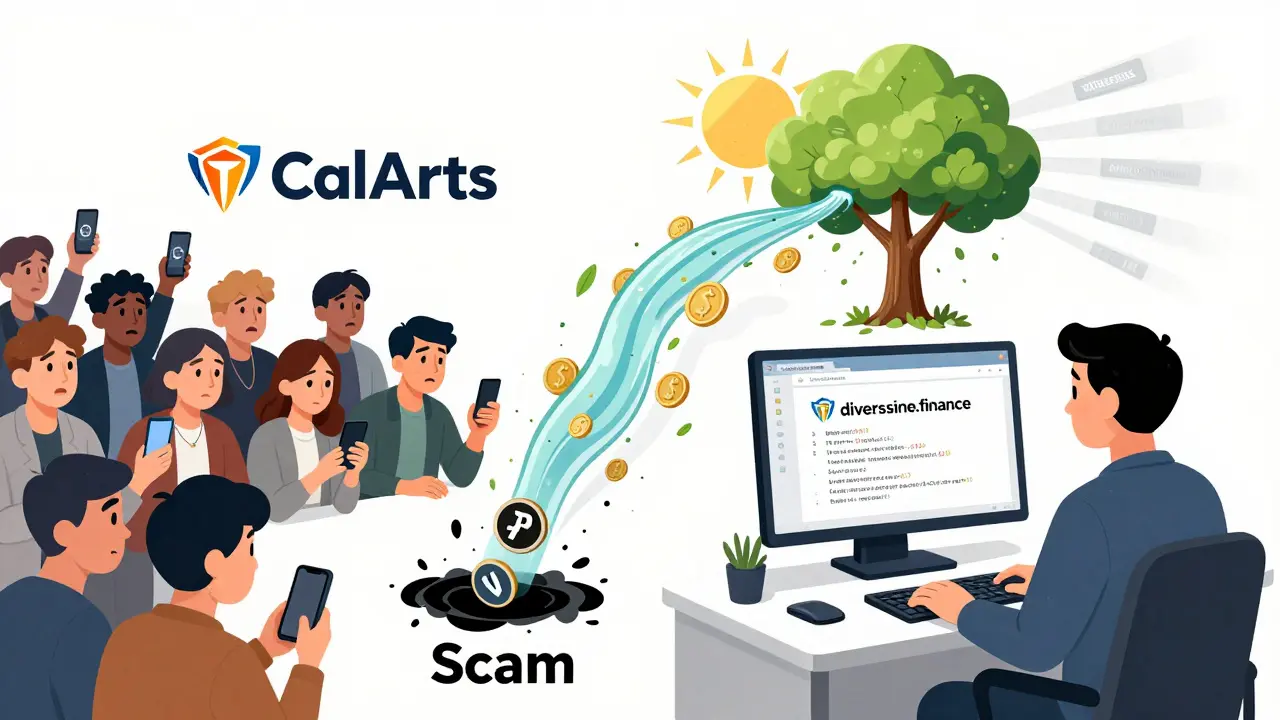
Scammers love to steal names. They see a project with a working product, a live token, and a community - and they spin fake airdrops to lure in the gullible. You’ll find sites claiming you can claim DIVER tokens by connecting your MetaMask. You’ll see bots on Twitter saying ‘DIVER airdrop live - claim now!’ They’ll even fake official-looking websites with .io or .xyz domains that look real until you check the contract address.
Here’s how to spot a fake DIVER airdrop:
- Real Divergence never asks you to send ETH or any token to claim anything.
- Real Divergence never asks for your private key or seed phrase.
- Real Divergence never runs airdrops through third-party sites like airdropalert.com or tokendrop.io.
- Real Divergence only communicates through its official website (divergence.finance) and verified Twitter/X account.
If you’ve already sent funds to one of these fake airdrops, you’ve lost them. There’s no recovery. No refund. No help from the team. They didn’t run it. They don’t control it. They don’t even know about it.
How to Actually Earn DIVER Tokens - The Real Way
Yes, you can earn DIVER tokens. But not for signing up. Not for sharing a link. You earn them by using the platform.
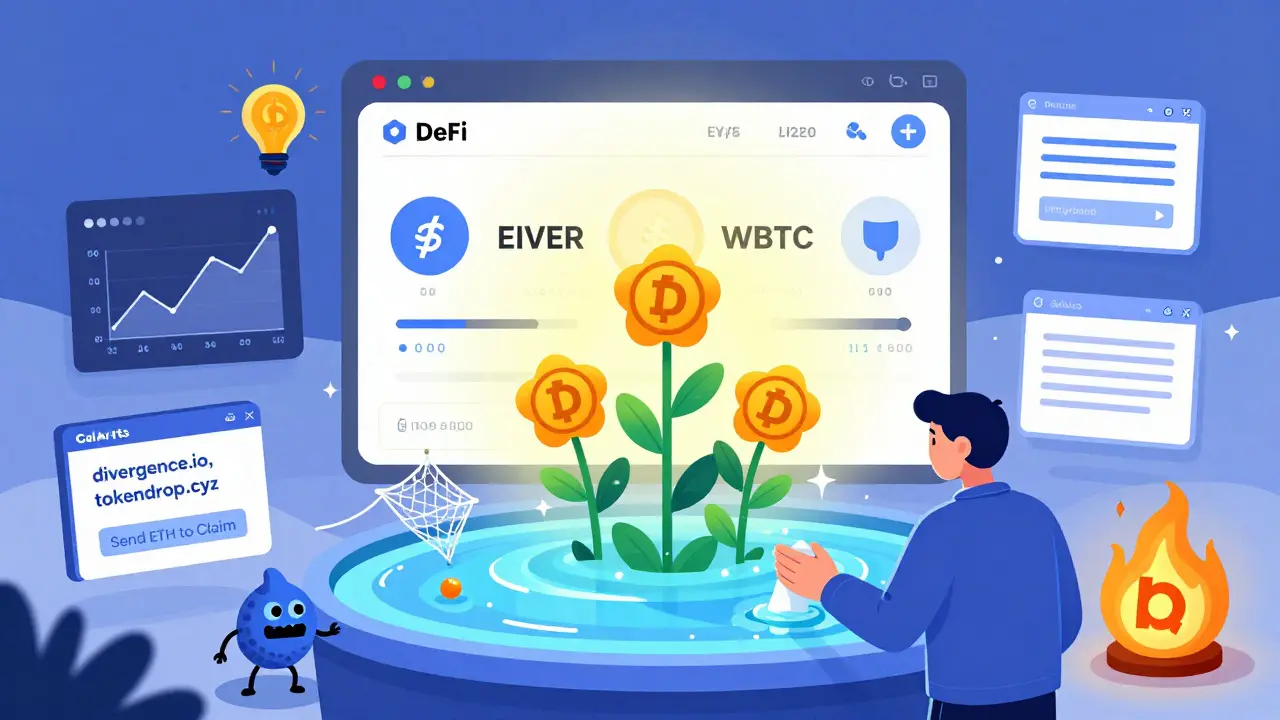
Divergence is a decentralized options trading protocol. It lets you hedge or speculate on the volatility of DeFi assets like ETH, WBTC, or AAVE using synthetic binary options. Think of it like betting on whether a token’s price will go up or down by a certain date - but fully on-chain, with no middleman.
Here’s how you earn DIVER:
- Provide liquidity to the options markets. When you deposit assets into a liquidity pool, you earn trading fees and DIVER rewards. This is the main way users get tokens today.
- Trade options on the platform. While you don’t get direct rewards for trading, your activity helps the protocol grow, which increases demand for DIVER.
- Hold DIVER to vote on governance proposals. The more you hold, the more influence you have over future upgrades, fee structures, and treasury decisions.
These aren’t free tokens. They’re earned through participation. You’re not getting a handout - you’re getting paid for contributing to the system. That’s how real DeFi works.
What’s the Point of DIVER Tokens?
DIVER isn’t just a token you trade. It’s the backbone of the protocol. It’s used for:
- Governance: Holders vote on proposals like changing fee tiers, adding new assets, or adjusting reward rates.
- Revenue sharing: A portion of trading fees is used to buy back and burn DIVER tokens, reducing supply over time.
- Liquidity mining: As mentioned, liquidity providers get DIVER as an incentive to keep the markets deep and liquid.
That’s it. No mystery. No hidden perks. No exclusive access for early airdrop recipients. If you want to benefit from DIVER, you have to be active on the platform. That’s the trade-off.
Is Divergence Worth Your Time?
It depends on what you’re looking for.
If you want to gamble on a token that might 10x tomorrow - skip it. DIVER isn’t a pump-and-dump coin. It’s a utility token for a niche DeFi product.
If you’re into decentralized derivatives, want to hedge your DeFi portfolio against volatility, and understand how options work - then yes, it’s worth exploring. The platform is live. The code is open. The liquidity is real. And the team is focused on building, not marketing.
Compare it to other DeFi protocols. Uniswap didn’t airdrop to millions. Compound didn’t give away tokens for retweets. They built tools people needed - and rewarded those who helped them grow. Divergence is following the same path.
What to Do Next
If you still want to get involved with Divergence, here’s exactly what to do:
- Go to divergence.finance - not a link from Twitter, not a Google ad. Type it yourself.
- Connect your wallet (MetaMask, WalletConnect, etc.).
- Read the documentation. Understand how binary options work on this platform.
- Deposit liquidity into a pool. Start small. See how rewards accumulate.
- Hold DIVER if you want to vote on future changes.
Don’t chase free tokens. Chase real utility. That’s the only way to win in DeFi.
Common Misconceptions About DIVER
Let’s clear up the biggest myths:
- Myth: ‘DIVER is going to list on Coinbase soon.’ Reality: No official announcement has been made. The team says they’re exploring listings, but nothing is confirmed.
- Myth: ‘I can claim DIVER from my old wallet.’ Reality: There was no snapshot. No airdrop. If you didn’t buy during the IDO, you didn’t get any.
- Myth: ‘DIVER has a max supply of 100 million.’ Reality: The total supply is 100 million DIVER, but only 20 million were sold in the IDO. The rest are reserved for future liquidity, team incentives, and ecosystem growth - not for airdrops.
- Myth: ‘Divergence is a scam because the price dropped.’ Reality: Most DeFi tokens drop after launch. That’s normal. What matters is if the product is used. Divergence has active liquidity pools and real trading volume.
Was there ever a Divergence (DIVER) airdrop?
No, Divergence never ran a traditional airdrop. All DIVER tokens were distributed through a Dutch auction IDO. Anyone could participate by bidding during the sale. No free tokens were given out to random wallets, social media followers, or early testers.
How can I get DIVER tokens now?
You can buy DIVER on SushiSwap or other decentralized exchanges. To earn DIVER, provide liquidity to the platform’s options markets. Liquidity providers receive trading fees and DIVER rewards as incentives. Holding DIVER also lets you vote on governance proposals.
Is the Divergence platform safe to use?
Divergence is a decentralized protocol built on Ethereum-compatible chains. Its smart contracts are open-source and have been audited by third parties. However, like all DeFi platforms, it carries risks - including smart contract bugs, impermanent loss, and volatility in the assets you’re trading. Never invest more than you can afford to lose.
Why is DIVER trading at such a low price?
The IDO started at $0.10 and ended at $0.05. DIVER now trades around $0.010686 because market demand has decreased since launch. This is common for DeFi tokens. The price reflects current trading activity, not the project’s long-term potential. The team’s focus is on building usage, not pushing the price up.
Are there fake DIVER airdrops I should avoid?
Yes. Many scams claim to offer free DIVER tokens in exchange for connecting your wallet or sending ETH. These are always fake. Divergence does not run airdrops. Never send funds or share your private key. Only interact with the official website: divergence.finance.
Final Thought
Real innovation doesn’t need hype. It doesn’t need free tokens to attract users. It just needs to work. Divergence is building something useful in DeFi - a way to hedge volatility without relying on centralized exchanges. It’s not glamorous. It’s not viral. But it’s real.
If you’re looking for a shortcut to free crypto, you’ll keep getting burned. If you’re looking to understand how DeFi actually works - this is one of the places to start.