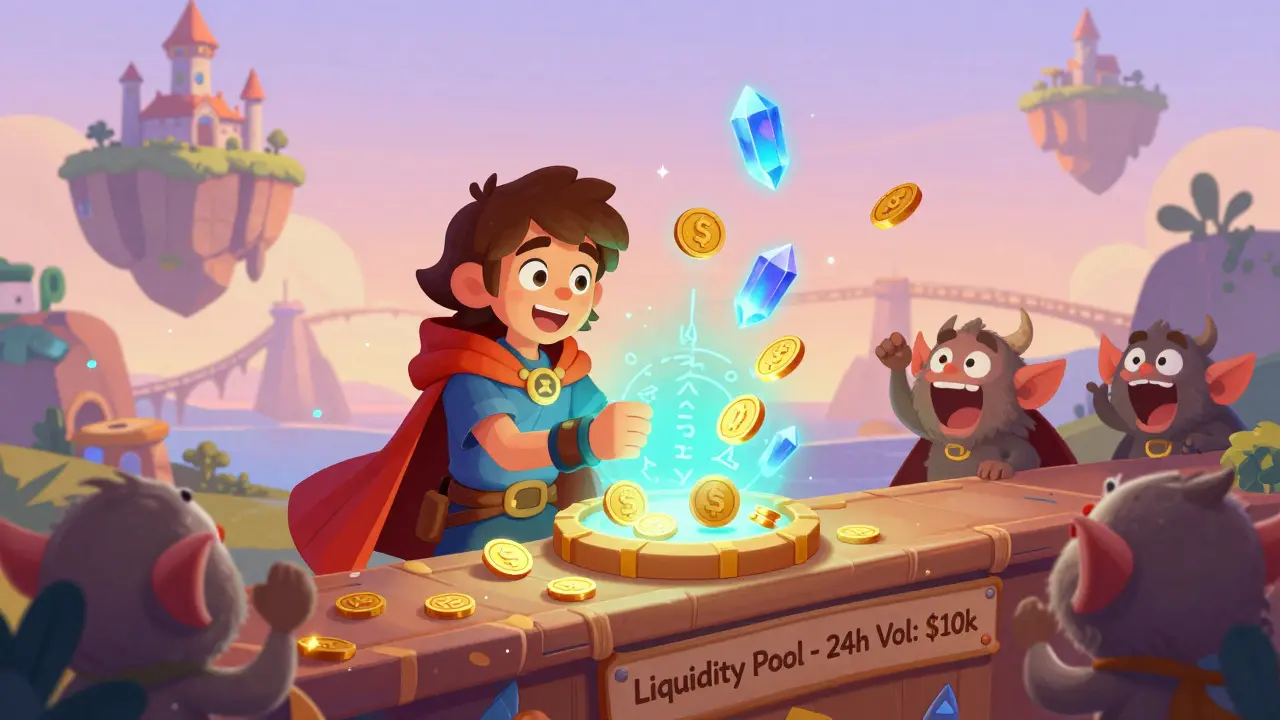
DeFi Kingdoms Crystalvale isn’t a crypto exchange like Binance or Coinbase. If you’re looking to trade Bitcoin, Ethereum, or even lesser-known altcoins with deep liquidity and fast execution, you’ll be disappointed. But if you want to learn how decentralized exchanges actually work-while fighting goblins, upgrading heroes, and earning tokens-you’ve found something rare.
What Is DeFi Kingdoms Crystalvale Really?
DeFi Kingdoms (Crystalvale) is a fantasy RPG game built on the Avalanche blockchain. It’s not just a game with tokens slapped on top. Every action inside the game-buying a hero, swapping tokens, staking rewards-is tied directly to real blockchain mechanics. The game’s native token, CRYSTAL, is used for everything: purchasing NFTs, providing liquidity, voting on upgrades, and trading on the in-game DEX.
Crystalvale launched in March 2022 as the second world in the DeFi Kingdoms universe. The original world, Serendale, ran on Harmony. Crystalvale moved to Avalanche to reduce fees and improve speed. That shift matters because now, every trade, stake, or bridge requires AVAX for gas. No fiat on-ramps. No credit cards. You need crypto to play crypto.
The In-Game Exchange: How It Works
The DEX inside Crystalvale isn’t some gimmick. It’s a direct clone of Uniswap V2. That means:
- You swap CRYSTAL for USDC, ETH, or other supported tokens
- You add liquidity to pools and earn trading fees
- Slippage settings affect your trade outcomes
- There are no order books-just automated market makers
Unlike centralized exchanges, you don’t deposit funds. You connect your wallet-usually MetaMask-and trade directly from it. Every swap costs gas. Every liquidity position is on-chain. There’s no customer support team to reverse a mistake. If you send tokens to the wrong address? They’re gone.
Here’s the catch: liquidity is thin. As of November 2023, the CRYSTAL/USDC pair had a 24-hour volume of just $10,957. Compare that to Uniswap, which moves over $1.2 billion daily. Trying to swap more than $500 in CRYSTAL can move the price 5% or more. That’s not trading-it’s gambling.
Why People Still Use It
Despite the low volume, thousands of players stick around. Why?
Because it teaches DeFi without lectures.
Most people don’t understand liquidity pools until they try to add them. In DeFi Kingdoms, you’re asked to provide CRYSTAL and USDC to a pool to earn rewards. You see the math in real time: if the price of CRYSTAL drops, you lose value compared to just holding it. That’s impermanent loss-and you learn it by doing, not reading a whitepaper.
Reddit user CryptoGamer87 put it well: “I learned how DEXs work by playing the game. I didn’t know what slippage was until I tried to swap $800 and lost $40 in price impact.”
For beginners, that’s gold. Traditional DeFi platforms assume you already know how to use wallets, approve tokens, and interpret gas fees. Crystalvale holds your hand through all of it.
What’s Missing
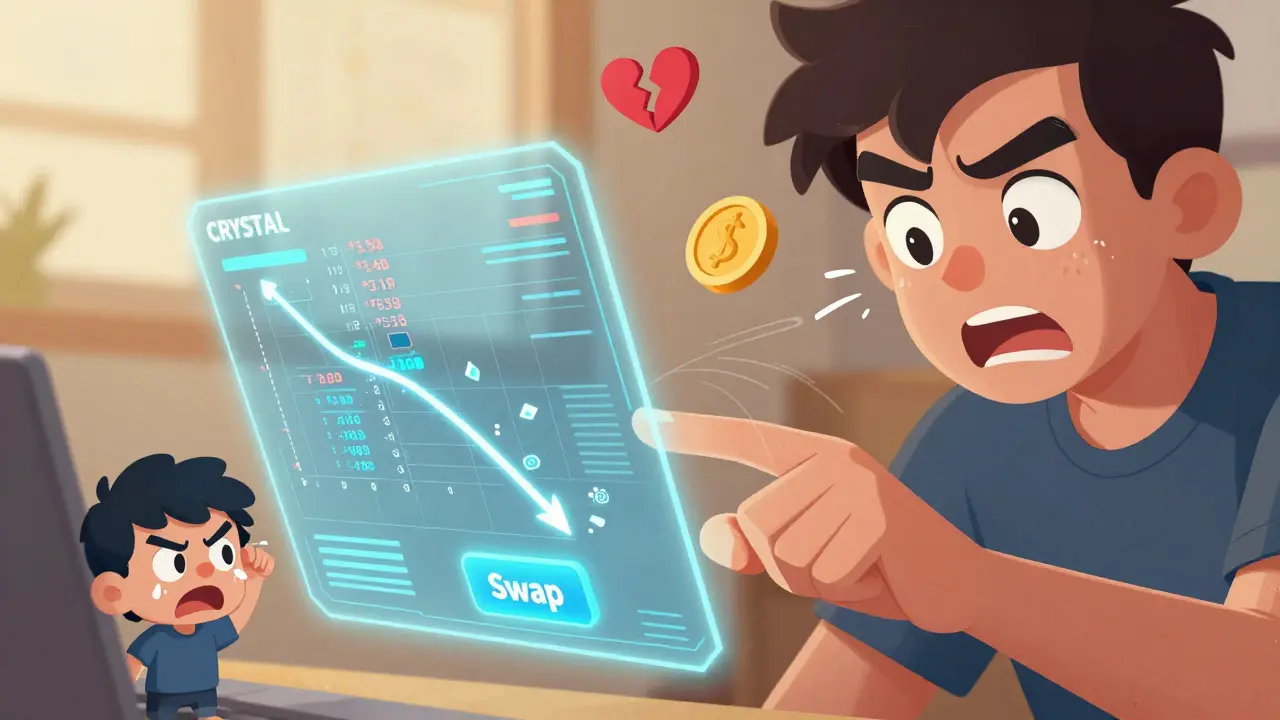
Don’t expect advanced features.
- No limit orders
- No margin trading
- No charting tools
- No support for hundreds of tokens
There are maybe a dozen tradable tokens, mostly stablecoins and other game tokens. You can’t trade SOL, DOT, or even LINK. The entire ecosystem revolves around CRYSTAL and its relationship with JEWEL (the original token from Serendale).
And bridging between Serendale and Crystalvale? A nightmare. Users report failed transactions, stuck funds, and hours of troubleshooting. Naavik’s analysis found that 43% of negative reviews mentioned bridge issues. If you’re not comfortable with blockchain troubleshooting, this isn’t for you.
Gas Fees and Network Performance
Crystalvale runs on Avalanche. That’s good-Avalanche is faster and cheaper than Ethereum. But it’s not free.
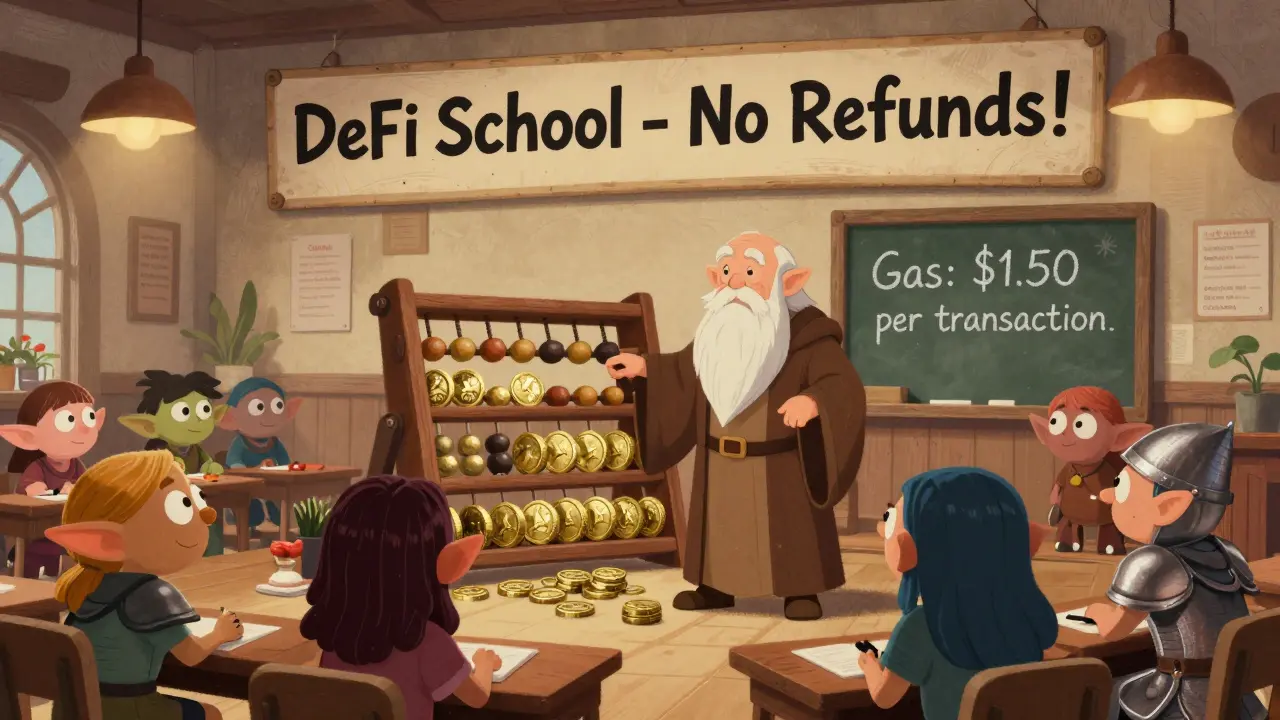
As of late 2023, average gas fees were $1-2 per transaction. During peak hours, they spiked to $5. That’s fine for swapping $20 worth of CRYSTAL. Not fine if you’re trying to stake $1,000 across five different pools. Each step costs you money.
And if the Avalanche network slows down? So does your game. You can’t farm heroes or swap tokens while the chain is congested. There’s no workaround. You wait.
Who Is This For?
DeFi Kingdoms Crystalvale isn’t for traders. It’s for learners.
If you’re new to crypto and want to understand:
- How DEXs actually work
- What liquidity provision means
- Why slippage happens
- How NFTs tie into DeFi
-then this is one of the best hands-on tools available.
But if you want to:
- Buy Bitcoin with a credit card
- Trade altcoins with leverage
- Move large amounts without price impact
-then look elsewhere. This isn’t an exchange. It’s a classroom disguised as a game.
Future Updates and Realistic Expectations
The DeFi Kingdoms team isn’t ignoring the problems. Their roadmap includes:
- Liquidity Vault (Q1 2024): Automatically rebalances pools to reduce impermanent loss
- 1inch Integration (mid-2024): Will pull in liquidity from larger DEXs to reduce slippage
- Improved Slippage Controls: Already reduced failed swaps by 37% after the November 2023 update
These are smart fixes. But they don’t change the core issue: the game’s economy is tiny. Without big investors or institutional liquidity, the DEX will always be shallow.
Industry analysts at Naavik say it best: “DFK’s strength isn’t trading-it’s onboarding. It turns abstract DeFi concepts into tangible gameplay. That’s valuable. But it won’t become a serious exchange unless it partners with a major liquidity provider.”
Final Verdict
DeFi Kingdoms Crystalvale isn’t a crypto exchange. It’s a DeFi simulator with a fantasy skin.
It’s perfect if you’re new, curious, and willing to lose a few dollars learning the ropes. It’s terrible if you’re serious about trading, investing, or moving money.
The game does one thing better than any other platform: it makes DeFi feel real. You don’t just read about liquidity pools-you create one. You don’t just hear about gas fees-you pay them. You don’t just learn about slippage-you feel it.
For that reason alone, it’s worth trying. Just don’t expect to get rich. Or even to trade smoothly.
Play it to learn. Not to profit.