
Imagine holding millions in Bitcoin but paying zero capital gains tax when you sell. In most countries, this sounds like a loophole waiting to be closed. In Switzerland, it is the law-for private investors. But there is a catch that trips up many newcomers: while you might escape income tax on profits, you will likely pay an annual wealth tax on those same holdings. Understanding this balance between exemption and assessment is critical for anyone managing digital assets in the Helvetic Republic.
The Swiss approach to cryptocurrency taxation is distinctively structured. It does not treat crypto as money or currency. Instead, the Swiss Federal Tax Administration (FTA) classifies cryptocurrencies as "crypto-based assets" (kryptobasierte vermögenswerte). This classification places them alongside stocks, bonds, and real estate within your private wealth portfolio. The framework was formalized in an FTA working paper in August 2019 and updated in December 2021, creating a clear, technology-neutral system that has remained stable through 2025 and into 2026.
How Your Crypto Is Valued for Wealth Tax
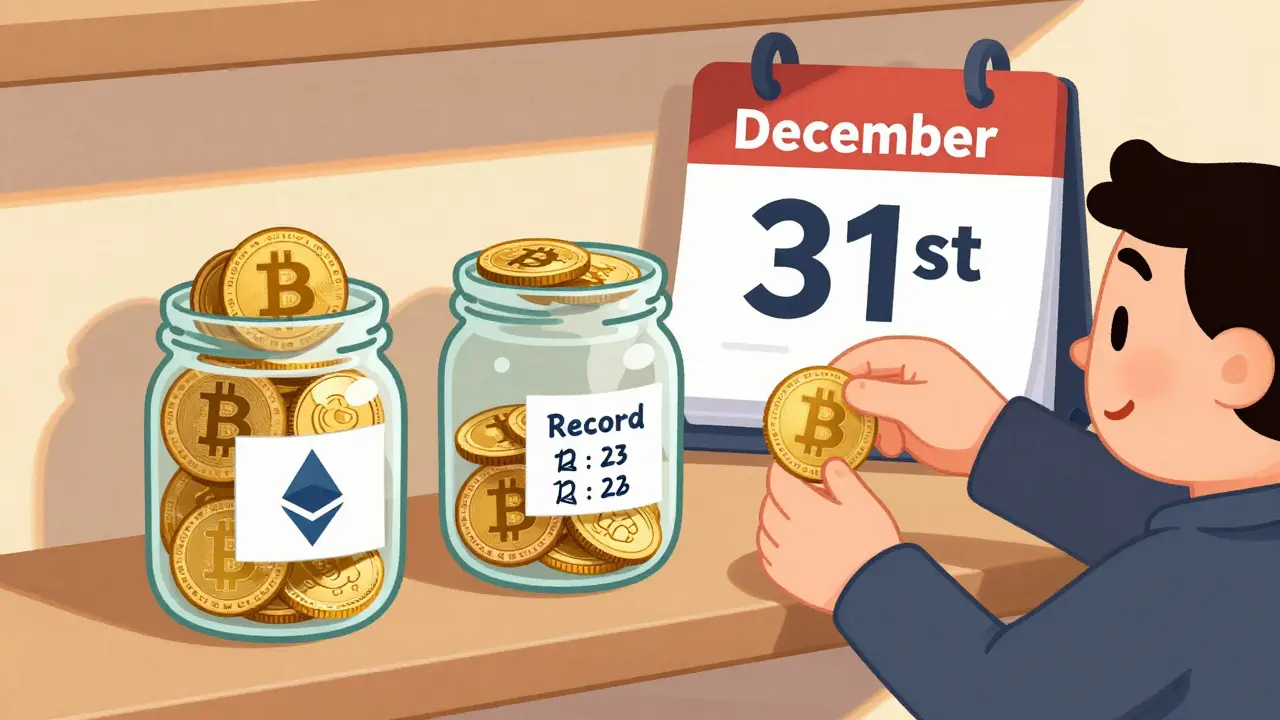
To calculate your wealth tax liability, you must declare the value of all your cryptocurrency holdings as of December 31st each year. This is not an average; it is a snapshot. The FTA provides specific rules for determining this value, which directly impacts your tax bill.
For major cryptocurrencies like Bitcoin, Ethereum, Ripple, Bitcoin Cash, and Litecoin, the FTA publishes official year-end conversion rates. You must use these specific figures to convert your holdings into Swiss francs (CHF). Using a different exchange rate from a third-party platform can lead to discrepancies during an audit.
If you hold smaller altcoins or tokens that do not have an official FTA rate, you must determine the value yourself using a strict hierarchy:
- Trading Platform Price: Use the year-end price from the specific exchange where you bought or sold the asset.
- Cost of Acquisition: If no current market price can be reliably determined, you must declare the crypto at its original purchase price in CHF.
This requirement means meticulous record-keeping is non-negotiable. You cannot simply estimate the value of a niche token. You need proof of the price on December 31st, or your initial buy receipt if the token has become illiquid.
The Private Investor vs. Professional Trader Distinction
The most significant factor in Swiss crypto taxation is whether you are classified as a private investor or a professional trader. This distinction determines whether you pay capital gains tax.
Private investors benefit from a complete exemption from capital gains tax (CGT) on their cryptocurrency investments. It does not matter how large the profit is or how long you held the asset. If you buy Bitcoin today and sell it next year for double the price, that gain is tax-free under Swiss federal and cantonal law, provided you remain within the private investment sphere.
However, if the FTA or local authorities classify you as a professional securities trader, the rules change drastically. Under FTA Circular No. 36, you may be deemed a professional trader if:
- You trade with high frequency and volume.
- You employ sophisticated trading strategies similar to institutional investors.
- You maintain a dedicated business structure for trading.
If you fall into this category, your crypto gains are treated as ordinary income. They are added to your total taxable income and taxed at standard rates, which include federal income tax (ranging from 0% to 11.5%), cantonal income tax, and municipal taxes. For high-volume traders, this can significantly erode profits compared to the private investor exemption.
Cantonal Wealth Tax Rates and Variations
Switzerland’s tax system is decentralized. While the federal government sets broad guidelines, each of the 26 cantons determines its own wealth tax rates. This creates a landscape where your tax burden depends heavily on your domicile.
| Canton | Approximate Rate Range | Notes |
|---|---|---|
| Zug | 0.3% - 0.8% | Known for low overall tax burden; popular for crypto businesses. |
| Basel-Stadt | 0.5% - 1.0% | Higher rates but strong public services. |
| Geneva | 0.6% - 1.2% | Progressive rates based on total wealth. |
| Nidwalden | 0.4% - 0.9% | Competitive rates for residents. |
Most cantons impose annual wealth tax rates ranging from 0.3% to 1% on total declared wealth. While these percentages seem low, they apply to your entire net worth, including cash, real estate, and crypto. For a portfolio valued at CHF 1 million, a 0.5% rate results in a CHF 5,000 annual payment. This is often considered a fair trade-off for the capital gains exemption, especially for long-term holders.

Token Classification and Specific Treatments
Not all cryptocurrencies are taxed identically. The Financial Market Supervisory Authority (FINMA) classifies tokens into three main categories, which influences their tax treatment:
- Payment Tokens: These function primarily as a medium of exchange (e.g., Bitcoin). They receive the most favorable treatment, exempt from private capital gains but fully included in wealth assessments.
- Utility Tokens: These provide access to a product or service. Their status can vary depending on usage. If used purely for access, they may be treated differently than if they are traded for speculation.
- Security Tokens: These represent traditional financial instruments. They are subject to the same regulations and tax treatments as stocks and bonds, including potential withholding taxes on dividends.
Understanding which category your token falls into is essential. A security token, for instance, might trigger withholding tax obligations that a payment token would not.
Staking, Mining, and DeFi Activities
Earning yield on your crypto introduces another layer of complexity. Passive holding is one thing; active generation of income is another.
Mining activities are generally classified as taxable business income. If you mine crypto, the rewards are treated as revenue, not capital appreciation. This means they are subject to income tax, not just wealth tax.
Staking rewards and participation in Decentralized Finance (DeFi) protocols require careful analysis. As confirmed by FTA updates in late 2024, staking rewards are typically viewed as income generation rather than pure wealth appreciation. Therefore, they may be subject to income tax upon receipt. However, if the staking activity is incidental to your private investment strategy, some interpretations allow for more lenient treatment. Consulting a tax advisor is crucial here, as the line between passive holding and active income generation can be thin.
Compliance and Record-Keeping Best Practices
The Swiss system is transparent but demands precision. Investors frequently cite administrative complexity as their biggest challenge. To stay compliant:
- Track Year-End Values: On December 31st, screenshot or export the value of every asset in your portfolio according to FTA guidelines.
- Maintain Purchase Records: Keep detailed logs of acquisition dates and prices for any token without an official FTA rate.
- Separate Wallets: Consider keeping private investment wallets separate from any business or trading accounts to avoid commingling funds, which could blur the line between private and professional status.
- Review Cantonal Changes: Tax laws can shift slightly at the cantonal level. Stay informed about local regulations if you move residences within Switzerland.
Many investors use specialized software to automate this tracking, reducing the risk of human error. Given the stakes, investing in accurate reporting tools is often cheaper than hiring a forensic accountant later.
Strategic Planning for Crypto Holders
For those serious about maximizing their after-tax returns, several strategies are commonly employed:
- Domicile Selection: Choosing a canton with lower wealth tax rates can save thousands annually. Zug and Nidwalden are often favored for their competitive structures.
- Family Structuring: Distributing assets among family members can sometimes lower the marginal wealth tax rate, as rates are often progressive.
- Holding Period Management: While capital gains are exempt for private investors, ensuring your activity remains clearly "private" is key. Avoid high-frequency trading patterns that might trigger a professional trader classification.
Switzerland’s commitment to a stable, technology-neutral tax framework makes it a top destination for crypto wealth management. By understanding the distinction between wealth tax and capital gains, and by maintaining rigorous records, you can leverage this favorable environment effectively.
Do I pay capital gains tax on crypto in Switzerland?
No, private investors are completely exempt from capital gains tax on cryptocurrency profits. However, you must pay an annual wealth tax on the value of your holdings. Professional traders are subject to income tax on their gains.
How is the value of my crypto determined for wealth tax?
The value is assessed as of December 31st each year. For major coins like Bitcoin and Ethereum, use the official Swiss Federal Tax Administration (FTA) rates. For other tokens, use the price from your trading platform or the original purchase cost if no market price exists.
What is the typical wealth tax rate for crypto in Switzerland?
Wealth tax rates vary by canton, typically ranging from 0.3% to 1% annually on your total declared wealth, including crypto. Rates are progressive, meaning higher wealth levels may incur higher percentages.
Are staking rewards taxable in Switzerland?
Yes, staking rewards are generally treated as income rather than capital appreciation. They are subject to income tax upon receipt. Mining income is also taxed as business income.
Can I avoid wealth tax by moving my crypto offshore?
Swiss residents must declare worldwide assets, including crypto held in foreign jurisdictions. Hiding assets can lead to severe penalties. Compliance requires full disclosure of all global holdings.