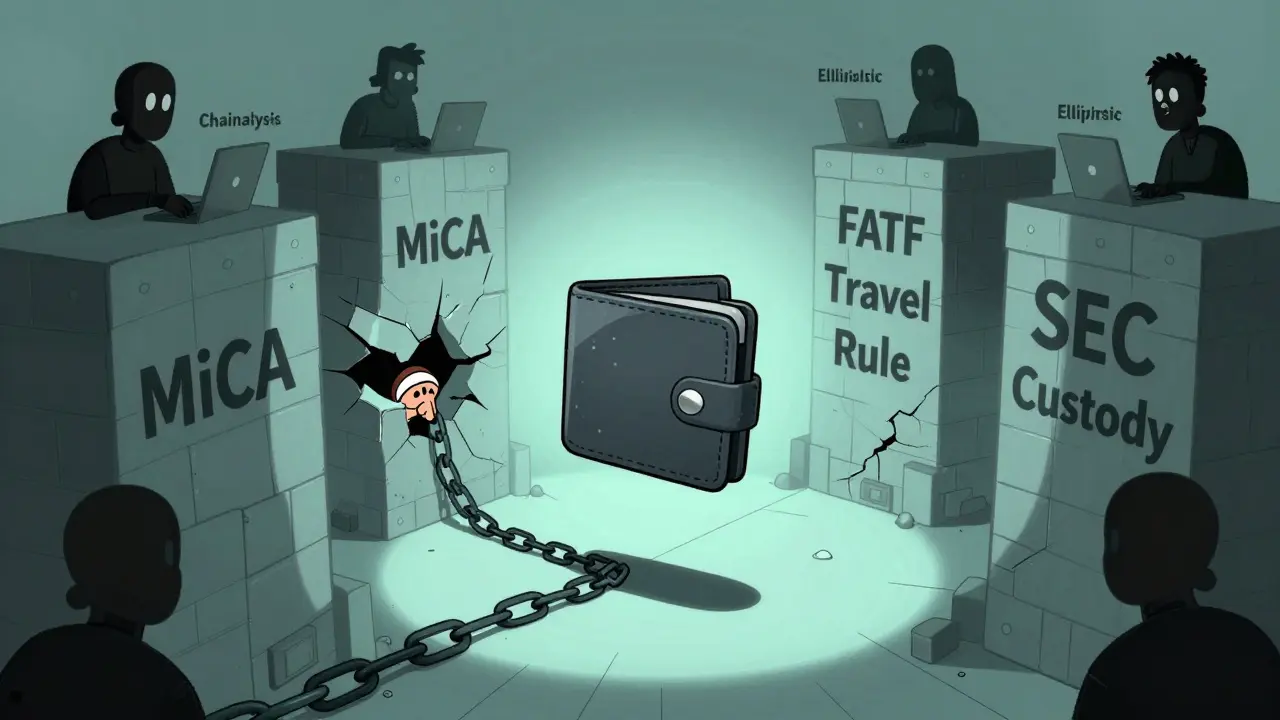
Decentralized Finance (DeFi) promised a financial revolution: no banks, no intermediaries, no gatekeepers. Just code, wallets, and permissionless access. But by 2026, that dream is bumping hard into reality. Regulators aren’t going away. They’re building walls around DeFi - and the walls are made of compliance.
Why DeFi Can’t Just Ignore Regulators
DeFi runs on blockchains. Transactions are pseudonymous. There’s no CEO, no headquarters, no customer service line. That’s the beauty. But it’s also the problem. Traditional finance has rules because people have names, addresses, and IDs. DeFi has wallet addresses. A wallet like 0x742d...a9c1 doesn’t tell you who owns it. That’s fine until someone sends stolen funds through it. Then regulators ask: Who did this? The answer? No one. Not officially. And that’s why global regulators stepped in. In 2024, the European Union’s MiCA (Markets in Crypto-Assets Regulation) became fully enforceable. It doesn’t just target exchanges. It targets protocols. If your DeFi app lets users lend, borrow, or trade crypto, MiCA says you’re a regulated entity. Same with the DORA (Digital Operational Resilience Act) - it forces DeFi platforms to prove they can handle cyberattacks, system failures, and third-party risks like a bank would. The FATF Travel Rule (Financial Action Task Force) is even more direct. It now requires any service handling crypto transfers over €1,000 to share sender and receiver info. That means DeFi apps must collect, store, and transmit personal data - the exact opposite of what DeFi was built on.The Core Conflict: Decentralization vs. Control
Here’s the real clash: DeFi’s strength is its lack of control. Smart contracts run automatically. No human can pause them. No one can freeze an account. That’s why DeFi is resilient to censorship. But compliance needs control. Regulators need to:- Know who you are (KYC)
- Track where money goes (AML)
- Shut down bad actors quickly
How DeFi Compliance Is Actually Being Built (And Why It’s Messy)
Some DeFi projects are trying to adapt. Here’s how:- KYC on the front-end: Users must upload ID before connecting their wallet. This kills anonymity but meets MiCA requirements.
- On-chain monitoring tools: Companies like Chainalysis and Elliptic analyze blockchain data to flag suspicious wallets. They don’t know who you are - but they can say, "This wallet sent $2M to a known mixer. Alert."
- Compliance layers: Some protocols now run a "compliance gateway" - a centralized service that checks transactions before they hit the smart contract. It’s a workaround. Not a solution.

The Institutional Nightmare: Custody Rules
Institutional investors - hedge funds, family offices, pension funds - want to get into DeFi. But they’re stuck. The U.S. SEC (Securities and Exchange Commission) has a rule: if you manage client assets, you must use a qualified custodian. That means a bank or trust company holding the keys. DeFi wallets? Not qualified. Smart contracts? Not qualified. Even multi-sig wallets? Still not qualified. In 2024, the SEC fined Galois Capital $225,000 for holding client crypto in non-compliant wallets. That wasn’t fraud. It was just using DeFi the way it was designed. But it violated custody rules. So now, institutions are sitting on the sidelines. Why? Because they can’t legally touch DeFi without breaking SEC rules - and they can’t break SEC rules without risking their entire business.Who’s Getting Crushed? The Small Players
Big DeFi projects like Aave or Uniswap have teams of lawyers, engineers, and compliance officers. They can afford to build KYC gates, hire blockchain analysts, and pay for audits. But what about the small protocol built by three developers in a garage? They can’t afford a $500,000 compliance system. They don’t have a legal department. They barely have a website. In 2025, these projects are being forced offline. Regulators aren’t shutting them down with lawsuits - they’re making it impossible to get listed on wallet interfaces like MetaMask or Trust Wallet. Without visibility, they die. The result? Market consolidation. Only the rich and well-connected survive. That’s the opposite of decentralization.The New Threats: AI, Deepfakes, and Social Engineering
Compliance isn’t just about money. It’s about trust. In 2026, the biggest risk isn’t a hacked smart contract. It’s a deepfake video of a DeFi project’s founder saying, "Send your funds to this new wallet - it’s safe." AI-generated phishing emails now mimic official DeFi interfaces with 98% accuracy. Users can’t tell the difference. And because DeFi users often skip KYC, there’s no identity to trace back to. Security firms like Halborn warn that 2026 will see a spike in "behavioral exploits" - not code bugs, but human mistakes tricked by AI. That means compliance now needs user education, AI detection tools, and real-time fraud alerts. All of which cost money. And time. And expertise.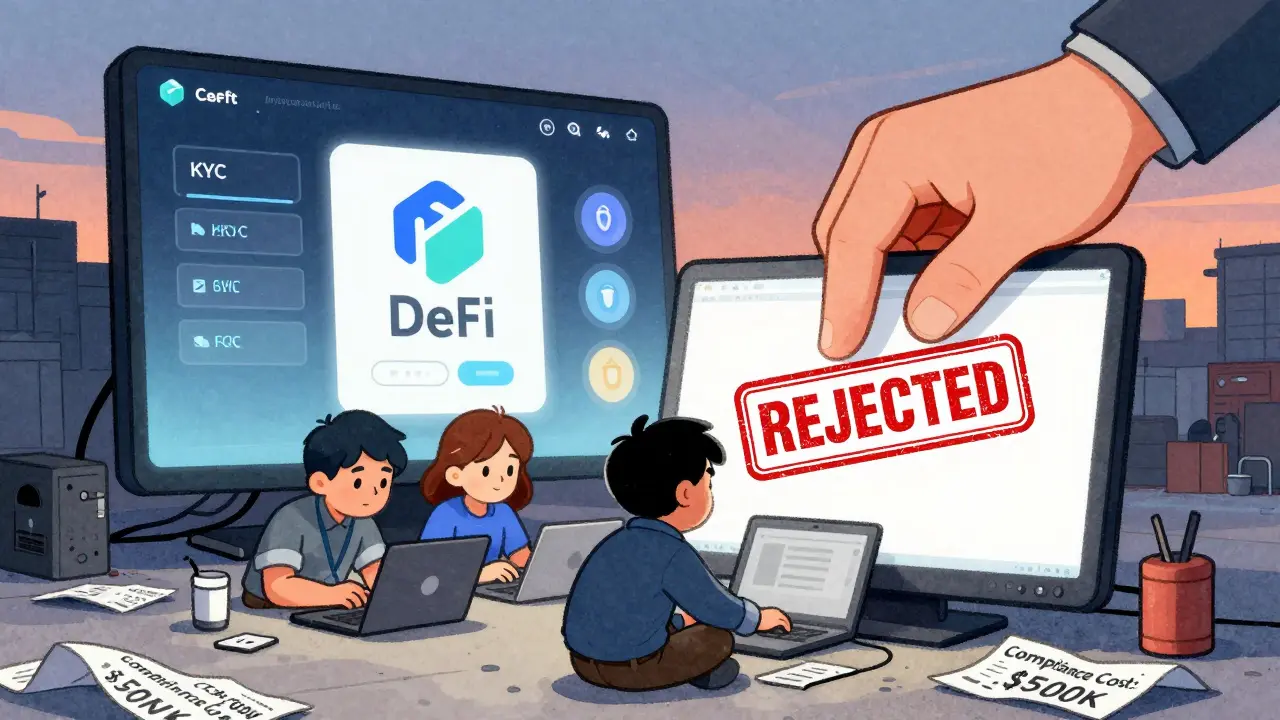
What’s Next? The Future Is Hybrid
DeFi won’t disappear. But it will change. The future isn’t fully decentralized. It’s not fully regulated either. It’s hybrid. Expect:- DeFi apps with optional KYC tiers - anonymous for small trades, verified for large ones.
- Regulatory sandboxes in places like Singapore and Switzerland, where DeFi projects can test compliance tools under supervision.
- AI-powered compliance engines that scan blockchain activity in real time and auto-flag anomalies - not because they know who you are, but because they know what suspicious behavior looks like.
- More lawsuits. More fines. More shutdowns.
What You Can Do Right Now
If you’re using DeFi:- Know your local laws. In New Zealand, Australia, the EU, and the U.S., you may need to report crypto gains - even from DeFi.
- Use wallets that support compliance tools. Some wallets now integrate AML checks before you send funds.
- Avoid mixing services. Even if they’re "legal," regulators see them as red flags.
- Don’t assume anonymity = safety. In 2026, anonymity is a liability.
- Start compliance early. Don’t wait until regulators come knocking.
- Partner with a RegTech provider. You don’t need to build everything yourself.
- Document everything. Regulators will ask for proof - not just of code, but of processes.
Frequently Asked Questions
Is DeFi illegal?
No, DeFi itself isn’t illegal. But many activities within DeFi - like unregulated trading, money laundering, or failing to report crypto gains - are. Regulators aren’t banning DeFi. They’re banning non-compliant DeFi.
Can I use DeFi without KYC?
Technically, yes - if you’re using a protocol that doesn’t enforce it. But in 2026, most major DeFi platforms (especially those with EU or U.S. users) require KYC. If you skip it, you might be cut off from liquidity, or worse, flagged by regulators as a high-risk user.
Why do regulators care about DeFi if it’s decentralized?
Because people use it - and they’re using real money. Regulators don’t care about the architecture. They care about the money flow. If $10 billion moves through DeFi every day, regulators will find a way to track it - even if it means forcing compliance onto the front-ends or service providers.
Are DeFi compliance tools trustworthy?
Some are. Tools like Chainalysis and Elliptic are used by governments and banks. But others are overhyped. Look for tools that explain how they detect risk - not just "AI-powered." If they can’t show you how they link transactions to behavior patterns, they’re not reliable.
What happens if I ignore DeFi compliance?
If you’re a retail user: you might lose access to wallets, face tax audits, or get flagged for suspicious activity. If you’re a project: your app will be delisted, your team could be sued, or your tokens could be classified as unregistered securities. The risks are real - and growing.