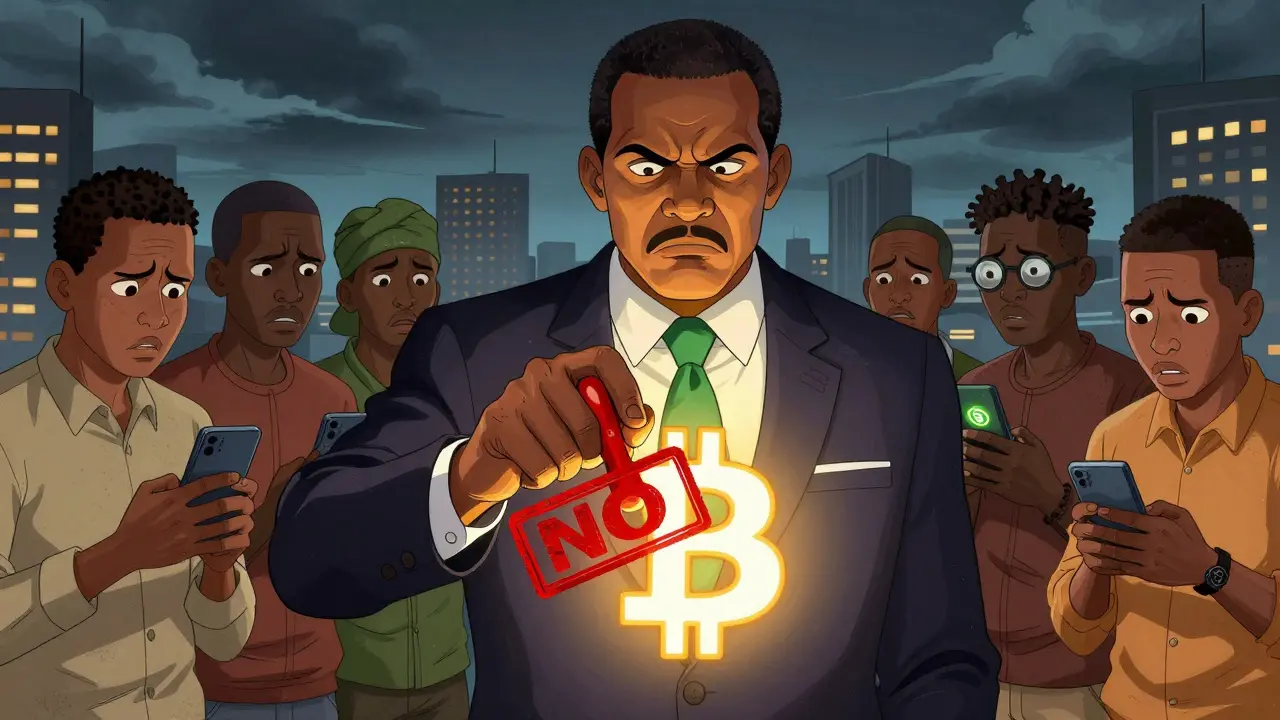
The Central Bank of Nigeria (CBN) didn’t start out friendly toward cryptocurrency. In fact, in 2017, it sent a clear message: don’t touch it. Banks were told to avoid any dealings with virtual currencies. No accounts. No transactions. No facilitation. The goal was simple - stop money laundering and stop funding terrorism. But what started as a warning became a full-blown crackdown, and the results were anything but simple.
2017: The First Warning
On January 12, 2017, the CBN issued its first formal notice on cryptocurrency. It wasn’t a ban on owning Bitcoin or Ethereum. It was a ban on banks handling them. Financial institutions were ordered not to open accounts for crypto exchanges, not to process payments for them, and not to hold any digital assets. The reasoning? Cryptocurrencies were seen as unregulated, risky, and potentially dangerous to Nigeria’s financial system. At the time, few people in Nigeria even knew what Bitcoin was. But the message was loud: the central bank didn’t trust it, and it wouldn’t let banks support it.2021: The Crackdown
Four years later, things got much harsher. On February 5, 2021, the CBN issued a new directive. This time, it wasn’t just about banks. It was about everyone connected to crypto. Banks were told to identify and shut down accounts linked to cryptocurrency trading. Any business that accepted crypto payments? Close it. Any exchange operating in Nigeria? Cut off from the banking system. The effect was immediate. Crypto trading didn’t disappear - it just went underground. People turned to peer-to-peer (P2P) platforms. They used mobile money, cash deposits, and even WhatsApp to trade Bitcoin for naira. Nigeria became one of the top P2P crypto markets in the world. Why? Because people needed it. For many, crypto was a way to save money when the naira kept losing value. For others, it was a way to send money to family abroad without going through slow, expensive banks. The crackdown backfired. When protests broke out in 2020 over police brutality, activists used cryptocurrency to raise funds. The government couldn’t trace the donations. The CBN couldn’t freeze the accounts. That’s when it became clear: you can’t stop what you can’t control.The SEC Steps In
While the CBN was busy blocking banks, another agency was watching closely. The Securities and Exchange Commission (SEC) didn’t see crypto as a threat - it saw it as an asset. In September 2020, the SEC released a statement saying digital assets that functioned like investments - like tokens sold to raise money - were securities. That meant they fell under its rules. This created a strange situation: one government body was banning crypto, while another was preparing to regulate it. The two agencies started working together. By 2022, they formed a joint committee to figure out how to handle crypto without wrecking the economy. The message was clear: prohibition wasn’t working. Regulation might.
December 2023: The Big Reversal
Then came the turning point. In December 2023, the CBN dropped its bombshell: Virtual Asset Service Provider (VASP) Guidelines. Banks could now open accounts for crypto companies - if those companies were licensed by the SEC. It was a full 180-degree turn. What had been forbidden was now allowed, but only under strict rules. The SEC’s Digital Assets Rules became the new standard. Every crypto exchange, wallet provider, or trading platform had to apply for a license. They had to prove they had strong anti-money laundering (AML) systems. They had to know who their customers were (KYC). They had to report suspicious activity. No more anonymous trading. No more offshore shells. If you wanted to operate in Nigeria, you had to play by the rules. This shift was tied to a bigger change: the Investments and Securities Act 2025. For the first time, Nigeria’s law formally recognized cryptocurrency as a security. That meant the SEC had legal authority to oversee it. The CBN still controlled banks. The SEC controlled crypto. Two agencies. One system. No more confusion.The Fallout
The years of restriction cost Nigeria dearly. OKX, a major global exchange, pulled out in July 2024. They told Nigerian users: withdraw your funds now. Binance stopped listing the naira. Two of its executives were detained over untraceable funds. These weren’t just business losses - they were signs of how badly the ban had damaged trust. But the market didn’t die. It adapted. P2P trading kept going. Local startups popped up. Nigerian users still bought Bitcoin. They still sent remittances. They still used crypto as a hedge against inflation. The government couldn’t stop them - so it decided to control them instead.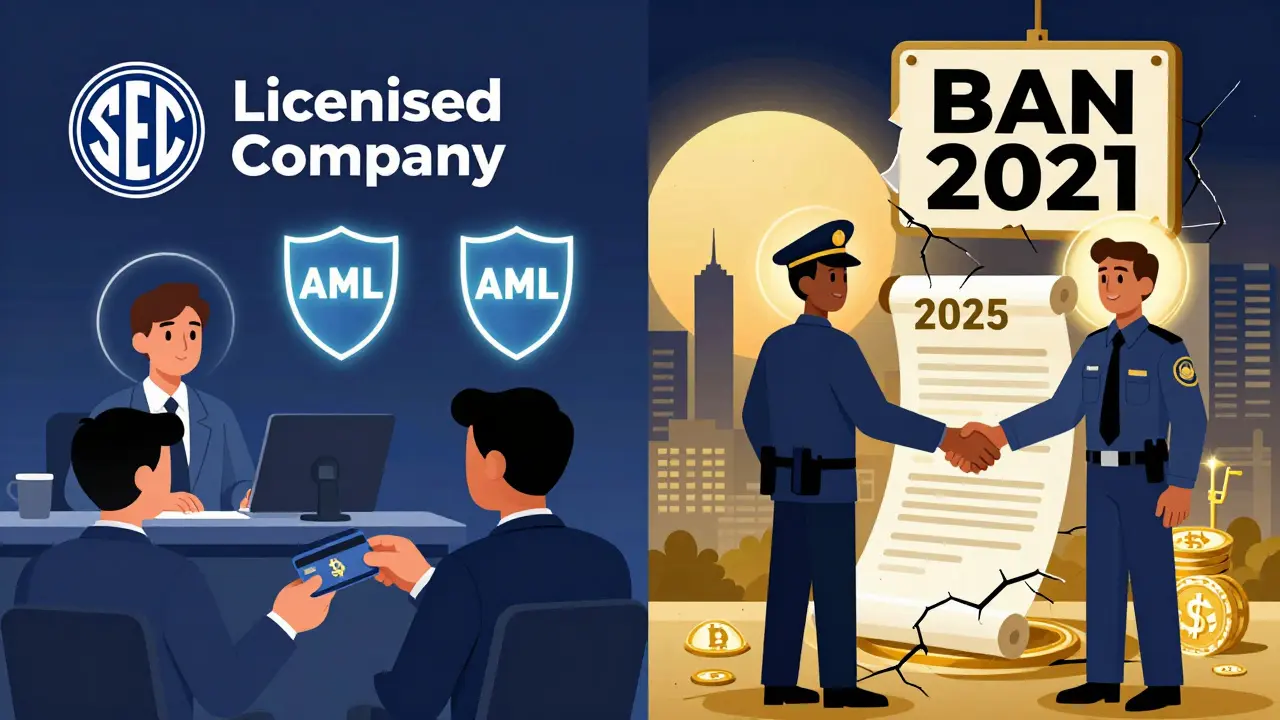
2025: A New Balance
Today, Nigeria’s crypto scene is a mix of caution and opportunity. The CBN still worries about foreign exchange pressure. The government still blames crypto traders for currency instability. But now, they have a system to manage it. Licensed VASPs are growing. More Nigerian fintechs are building crypto integrations. International investors are watching. Nigeria is on track to be removed from the Financial Action Task Force’s Gray List in 2025 - a big win for its AML efforts. That’s because regulation works better than bans. The lesson? You can’t outlaw a technology. You can only regulate it. Nigeria learned that the hard way. Now, it’s trying to get it right.| Year | Action | Impact |
|---|---|---|
| 2017 | CBN Circular bans banks from handling crypto | First formal restriction; crypto seen as risky |
| 2020 | SEC declares digital assets as securities | Start of dual-regulation approach |
| 2021 | CBN orders banks to close crypto accounts | P2P trading explodes; crypto becomes underground lifeline |
| 2023 | CBN issues VASP Guidelines | Banks can now serve licensed crypto firms |
| 2025 | Investments and Securities Act legalizes crypto as security | SEC becomes primary regulator; CBN oversees banking access |
What’s Next?
The road ahead isn’t smooth. Nigeria still has to prove it can enforce these rules. There are still unlicensed platforms operating. Some users still trade through offshore apps. The naira’s instability means crypto will remain popular - whether the government likes it or not. But the shift from ban to regulation is real. And it matters. Nigeria isn’t just trying to catch up - it’s setting an example for Africa. Other countries are watching. If Nigeria can make this work, it could become the continent’s crypto hub.Is cryptocurrency legal in Nigeria in 2025?
Yes, cryptocurrency is legal in Nigeria - but only if operated through licensed Virtual Asset Service Providers (VASPs) approved by the Securities and Exchange Commission (SEC). The Central Bank of Nigeria allows banks to serve these licensed firms, ending the 2021 banking ban. However, unlicensed trading remains risky and unsupported by financial institutions.
Why did the CBN ban crypto in 2021?
The CBN banned crypto transactions through banks in 2021 because it feared money laundering, terrorism financing, and loss of control over the naira. It also worried that crypto use could undermine monetary policy and destabilize the foreign exchange market. The move was meant to protect the formal financial system - but it pushed trading underground instead.
Can I still buy Bitcoin in Nigeria today?
Yes. You can still buy Bitcoin and other cryptocurrencies in Nigeria through licensed exchanges like Luno, Paxful, and Binance (which still operates under SEC oversight). Peer-to-peer trading remains popular. The difference now is that these platforms must follow strict KYC and AML rules - and your bank can legally process payments to them if they’re licensed.
What role does the SEC play in Nigeria’s crypto market?
The SEC is now the main regulator for cryptocurrency in Nigeria. It licenses and supervises Virtual Asset Service Providers (VASPs), enforces anti-money laundering rules, and treats certain digital assets as securities under the Investments and Securities Act 2025. This means crypto exchanges, token sales, and staking platforms must register with the SEC - not just the CBN.
Did Nigeria’s crypto ban hurt its economy?
Yes. The 2021 ban forced out major exchanges like OKX and disrupted remittance flows. Nigerian entrepreneurs lost access to global crypto markets, and innovation slowed. But the underground market grew - with P2P trading hitting over $17 billion in annual volume by 2023. The cost of the ban was high, and it pushed regulators toward the current licensed model.