Is Bitstamp Still Worth It for XRP Traders?
If you’re looking at Bitstamp as a place to trade XRP, you probably know the history. It wasn’t just any old exchange; it was the first Ripple Gateway. That relationship built Bitstamp’s reputation, especially back when the industry was still finding its footing. But does that history matter in 2026? Or has the platform fallen behind newer competitors? We’ve looked at the latest numbers, security protocols, and user feedback to cut through the noise.
Here’s the deal: Bitstamp remains one of the most regulated exchanges around, holding licenses from major authorities. However, it’s not for everyone. If you live in the United States, you can’t even sign up. They suspended services there way back in July 2022 due to regulatory pressure. So, before you check your balance, make sure you’re eligible. For everyone else, particularly in Europe, the story is different.
The Ripple Legacy and Current Status
Founded in 2011 by Nejc Kodrič and Damijan Merlak in Slovenia, Bitstamp started as a Bitcoin exchange. Its big break came when it became the inaugural partner in Ripple's incentive program. This made them one of the first exchanges globally to facilitate transactions for Ripple’s digital asset. That legacy gives the platform a level of trust that many new players struggle to earn. In fact, their historical integration with XRP led to consistently high liquidity for pairs like XRP/EUR and XRP/USD.
According to market data from Q1 2025, XRP trading accounted for approximately 12% of Bitstamp’s total platform volume. For an exchange ranking #28 globally by trading volume, that’s a significant chunk. While giants like Binance move billions daily, Bitstamp holds its ground in specific niches. Their monthly volume sits around $1.2 billion, which might sound lower than Binance’s $1.8 trillion, but it indicates stability rather than massive speculation.
Does being old mean being outdated? Not necessarily. The infrastructure supports standard web browsers and offers mobile apps for iOS and Android. The iOS app version 4.2.1 was updated recently in March 2025, showing active maintenance. However, the interface feels more utilitarian than flashy. You won’t find complex derivatives or staking programs pushing yields. It’s built for buying and holding, or straightforward spot trading.
Fees and Trading Costs Explained
Let’s talk money. Most people lose sleep over hidden fees, and Bitstamp’s structure is transparent but not always the cheapest. The standard rate is 0.3% for takers and 0.2% for makers. That means if you’re placing a limit order that stays on the book, you pay slightly less than someone executing instantly. There’s no native token required for discounts here, unlike Binance requiring BNB or KuCoin needing KCS.
For casual traders, this simplicity is a pro. You aren’t forced to buy a specific coin to save pennies. But when you stack these fees against the competition, they stand out. A 2025 evaluation by Traders Union gave Bitstamp a score of 5.2 out of 10 for trading fees. Compare that to Coinbase, which scored 6.8, and Binance, sitting comfortably at 8.2. If you’re moving large sums frequently, those percentage points add up fast. A $10,000 trade on Bitstamp costs you $30, whereas on Binance, it could be significantly less depending on their VIP tiers.
| Exchange | Maker Fee | Taker Fee | Native Token Discount |
|---|---|---|---|
| Bitstamp | 0.2% | 0.3% | No |
| Kraken | 0.16% | 0.26% | Yes |
| Coinbase | Varies | Varies | No |
On the deposit front, Bitstamp supports multiple methods including Apple Pay, Google Pay, Bank Transfer (ACH), and Credit/Debit Cards. The minimum fiat deposit requirement is relatively accessible at $25. This makes it easy to test the waters without risking thousands. SEPA transfers are popular for European users, offering quick settlement times. Withdrawals generally go back to Bank Transfers or Crypto wallets, though card withdrawals have higher processing windows.
Security Standards and Regulations
This is where Bitstamp tries to differentiate itself. Security isn’t just about password strength; it’s about who watches over the company. Bitstamp operates under Tier-1 regulatory frameworks. They hold registration with FinCEN in the United States (even though they don't serve US clients) and FINTRAC in Canada. These aren’t just stickers; they require strict compliance audits.
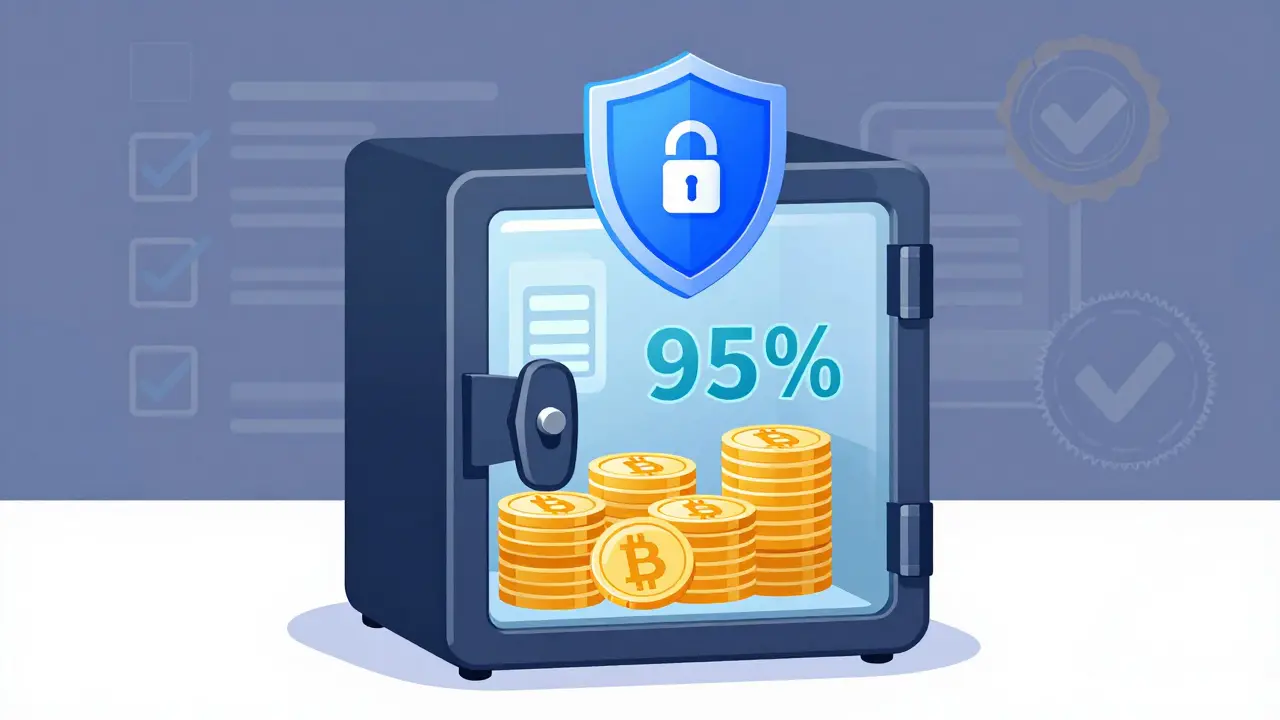
In terms of asset storage, 95% of customer funds are kept in cold wallets. That means the vast majority of coins are offline, protected from internet breaches. They also use two-factor authentication (2FA) and TLS 1.3 encryption for data transmission. These are industry standards now, but Bitstamp has used them for years.
However, it’s not all perfect. Expert analysis from 2025 pointed out a gap: the absence of verifiable proof of reserves. While they claim 95% cold storage, independent penetration tests aren’t published for public viewing. Other platforms like OKX have investor protection funds, which Bitstamp lacks. Dirk Van Haster, a crypto analyst, noted this in January 2025 reviews. He praised their adherence to regulation but criticized the lack of transparency regarding reserve audits. For a risk-averse trader, that distinction matters. You are trusting their compliance records rather than real-time blockchain proofs.
User Experience and Support Realities
You could have great fees and security, but if the site crashes or support vanishes, you’ll be frustrated. Bitstamp has a moderate learning curve. CryptoSlate rated it 6.5 out of 10 for difficulty. Beginners might find it functional but dry. Advanced traders might miss tools found on Kraken or Binance.
The account verification process is the biggest bottleneck. Official documentation says it takes 3-7 business days. User reports on Reddit suggest it often exceeds 14 days during peak times. One verified review mentioned a "grueling two-month struggle" trying to recover funds after verification issues. This delay can kill trading momentum.
Customer support operates via email and phone during business hours (9 AM to 5 PM GMT, Monday-Friday). The problem? Response times. FXEmpire tested this in Q1 2025 and found average email response times of 62 hours. That’s nearly three working days just to get a reply. If you have an urgent issue, waiting three days is not acceptable. Over 41% of negative reviews cite slow support as the main pain point.

XRP Specifics: Liquidity and Availability
Since you clicked the title mentioning Ripple Gateway, XRP performance is likely your priority. Bitstamp maintains deep liquidity for XRP pairs. TradingView’s liquidity analysis from March 2025 showed Bitstamp’s order book depth was roughly 35% greater than average among Tier-2 exchanges for XRP/EUR. For German users specifically, ProvenExpert reviews averaged 4.1 stars, praising the reliability of these pairs.
Withdrawals take time though. Discussions on r/CryptoCurrency noted average XRP withdrawal processing times of 72 hours. In crypto, 72 hours is an eternity. While other chains settle instantly off-exchange, getting your funds out of Bitstamp to another wallet involves manual processing. This aligns with their cautious security stance, but it adds friction.
They also launched recurring buy functionality for XRP in March 2025. Minimum amounts are set at $25 per transaction. This is useful for dollar-cost averaging without managing individual trades. However, given their roadmap, they are looking toward integrating Ripple’s PayString protocol by late 2025. This suggests they intend to keep the bridge between fiat and XRP robust.
How It Compares to the Giants
We can’t judge an exchange in isolation. Bitstack faces stiff competition from global leaders. Kraken, for instance, is similarly regulated but offers a more advanced trading interface and faster execution. Coinbase dominates the US market, which Bitstamp cannot enter. Binance leads in volume and low fees but carries regulatory heat in various jurisdictions.
If you prioritize stability over features, Bitstamp wins. If you want speed and tools, Kraken is better. If you need access to hundreds of altcoins, neither will satisfy you compared to a decentralized exchange. Bitstamp focuses on quality over quantity of assets. They trade Bitcoin, Ethereum, and select altcoins, keeping the platform manageable.
Frequently Asked Questions
Can I use Bitstamp if I live in the United States?
No. Bitstamp suspended services for US customers in July 2022 due to regulatory restrictions. They do not currently accept new registrations from the United States.
Is Bitstamp safe for storing XRP long-term?
It is highly regulated with 95% cold storage, but they lack public proof-of-reserve audits. For significant holdings, experts recommend transferring to a private hardware wallet.
How much do withdrawal fees cost?
Fees depend on the method. Cryptocurrency withdrawals vary by network congestion. Fiat withdrawals via bank transfer are typically free, but credit card withdrawals may incur charges.
Does Bitstamp offer leverage or futures trading?
No. Bitstamp focuses on spot trading. They do not offer leverage, margin trading, or cryptocurrency futures contracts at this time.
Why does verification take so long?
Verification requires manual identity checks for security compliance. While official timelines are 3-7 days, peak periods can extend this to 14 days or more.