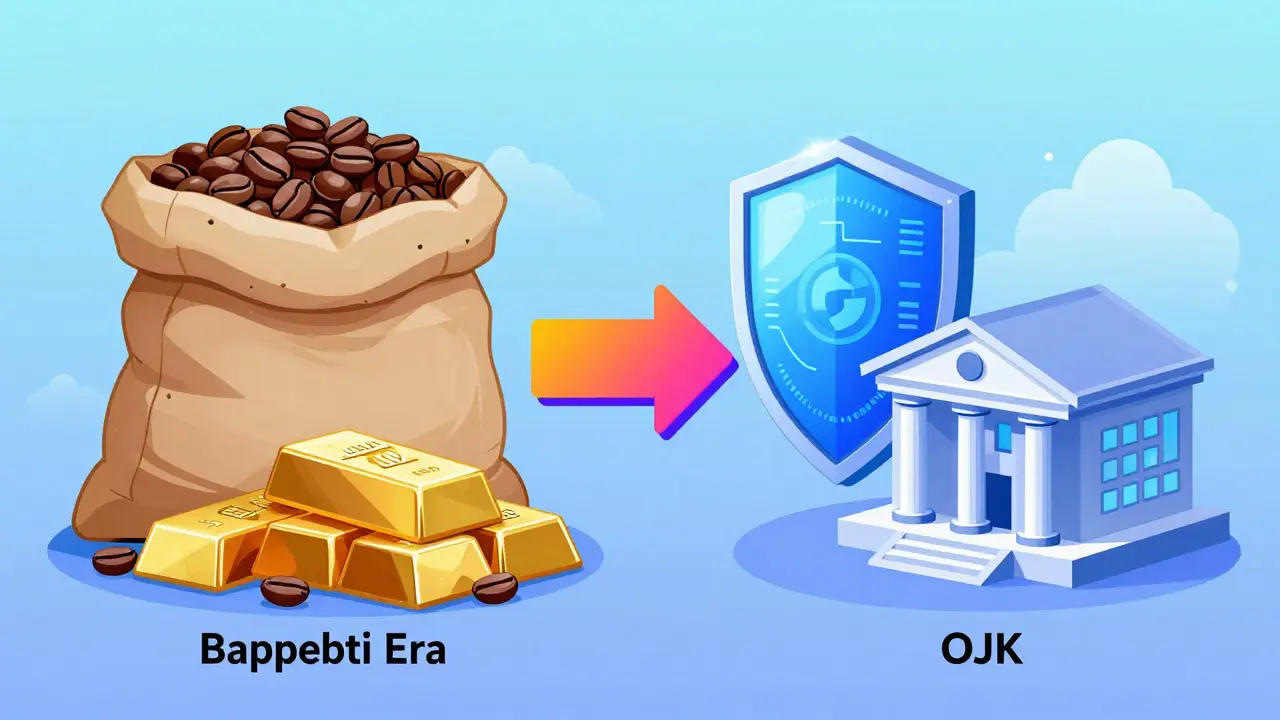
If you've been tracking the Indonesian crypto market, you know it's one of the fastest-growing hubs in Southeast Asia. But if you're trying to get a license or trade legally there, the rules just underwent a massive identity crisis. For years, crypto was treated like gold or coffee-a commodity. As of January 10, 2025, that's over. The Bappebti crypto oversight era has ended, and the Financial Services Authority (OJK) has taken the wheel.
The Big Switch: From Commodities to Finance
For a long time, Bappebti is the Indonesian Commodity Futures Trading Supervisory Body responsible for overseeing the trading of crypto assets as commodities . If you wanted to launch an exchange, you dealt with Bappebti. They viewed Bitcoin and Ethereum not as currency or stocks, but as physical goods traded on an exchange. This was formalized under Bappebti Regulation No. 8/2021, which set the ground rules for the physical crypto market.
However, the government realized that treating a digital wallet like a warehouse of corn wasn't sustainable. Under the P2SK Law (Law No. 4 of 2023), Indonesia decided to move crypto into the formal financial sector. On January 10, 2025, the regulatory authority officially transferred to the OJK is the Financial Services Authority of Indonesia, which regulates banks, capital markets, and non-bank financial institutions .
Why does this matter? Because it changes the DNA of how crypto is viewed. It's no longer just a "commodity"; it is now classified as a "digital financial asset." This means the oversight is now more like the strict rules governing banks and stockbrokers rather than the rules for trading palm oil.
What Happened to Existing Licenses?
If you're a business owner who already had a Bappebti license, you aren't starting from zero. The transition was designed to avoid a market crash. According to OJK Regulation No. 27 of 2024, existing licenses and approvals remain valid during the transition period. This ensures that the 17 million+ investors in Indonesia didn't suddenly find their accounts frozen while the government swapped letterheads.
However, the expectations have shifted. While your old license keeps you in the game for now, you're now playing by financial services rules. This includes tighter requirements for transaction settlements, offering processes, and the infrastructure used to store assets. You're no longer just a "trader"; you are now part of the digital financial innovation framework.
| Feature | Bappebti Era (Pre-2025) | OJK Era (Post-Jan 2025) |
|---|---|---|
| Asset Classification | Commodities | Digital Financial Assets |
| Regulatory Focus | Futures Trading / Physical Markets | Financial Services / Banking Standards |
| Governing Law | Bappebti Regulation No. 8/2021 | OJK Regulation No. 27/2024 & P2SK Law |
| Primary Goal | Market Registration | Financial Stability & Institutional Integration |

The New Infrastructure Map
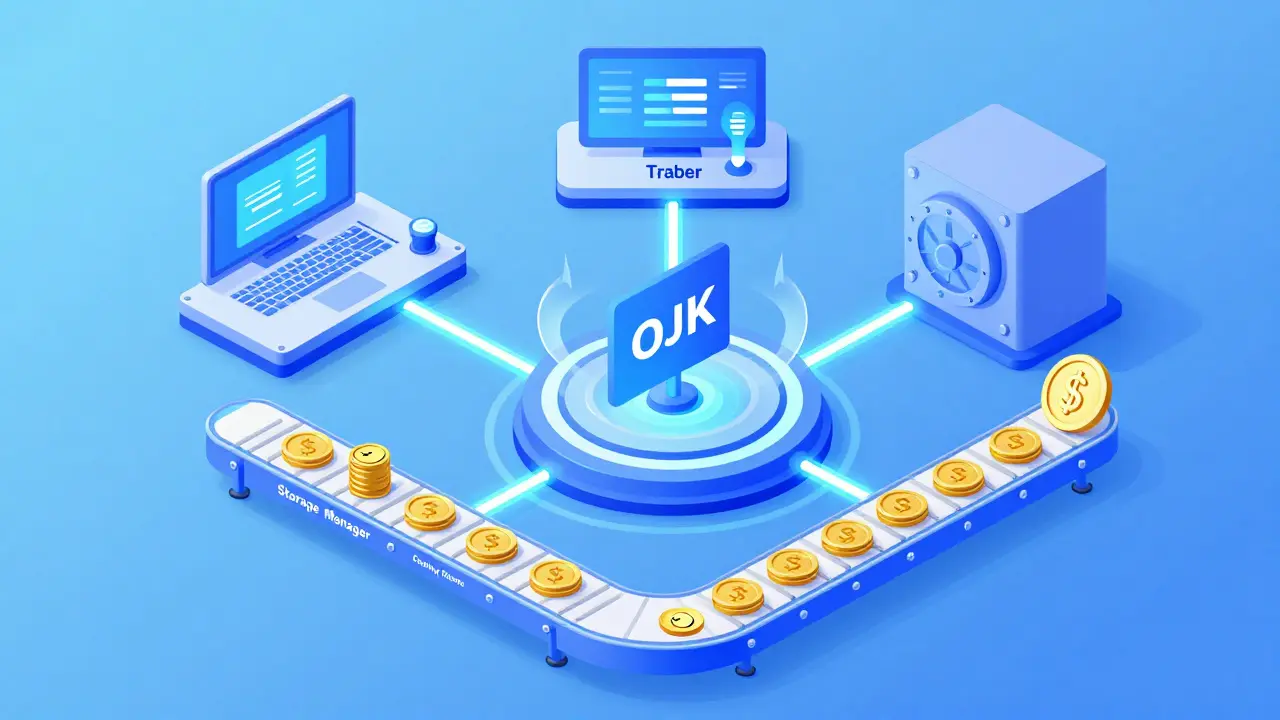
Under the OJK's watch, the ecosystem is more structured. It's not just about the exchange anymore. The framework identifies several critical roles that must operate in harmony:
- Digital Financial Asset Traders: These are the platforms where you actually buy and sell. They must meet rigorous financial stability requirements.
- Clearing Houses: Entities that ensure the trade actually happens and the money moves from point A to point B.
- Storage Managers: The "vaults" of the crypto world. These entities handle the custody of private keys and assets, now under much stricter financial auditing.
It's also worth noting the role of Bank Indonesia is the central bank of Indonesia, responsible for monetary stability and the payment system . While OJK handles the *trading* and *licensing* of the assets, Bank Indonesia still controls the *payment systems*. If you're integrating a payment gateway for crypto, you're still dealing with BI's rules on how money moves through the Indonesian banking system.
How Many Assets Can You Actually Trade?
Bappebti was very specific about a "whitelist." They didn't let just any random meme coin onto the market. By June 2023, they had approved about 501 cryptocurrencies, including the big names like Bitcoin, a decentralized digital currency that serves as a store of value , Ethereum, a blockchain platform that enables smart contracts , and Solana.
Under OJK, the goal is to move toward a more sophisticated approach. Instead of just a list of "approved coins," the OJK is looking at the *type* of asset. This could lead to a world where some assets are treated as utility tokens while others are treated as full-blown securities. This shift is a huge win for institutional investors who want legal certainty before dumping millions of dollars into the market.
Pitfalls and Pro Tips for Operators
If you're looking to enter the Indonesian market now, don't make the mistake of looking for "Bappebti guidelines" in 2026. You're in the OJK era now. Here's a few things to keep in mind:
- Compliance is no longer optional: Moving from commodity to financial regulation means your reporting requirements just tripled. You'll need a robust compliance team that understands OJK's reporting cycles.
- Watch the P2SK Law: Everything stems from the Law No. 4 of 2023. If you're arguing a legal point with a regulator, start there.
- Integrated Ecosystems: Don't just focus on the trading app. Ensure your clearing and storage partners are also OJK-compliant. A gap in the chain can lead to a full license revocation.
The volume of trades in Indonesia is staggering-surpassing IDR 650 trillion in 2024. That kind of money attracts a lot of scrutiny. The OJK isn't interested in "moving fast and breaking things"; they're interested in stability and consumer protection.
Who regulates crypto in Indonesia now?
Since January 10, 2025, the Financial Services Authority (OJK) is the primary regulator for crypto assets, taking over from Bappebti. While OJK handles the trading and licensing, Bank Indonesia (BI) still oversees the payment systems.
Is a Bappebti license still valid?
Yes, according to OJK Regulation No. 27 of 2024, existing licenses and approvals granted by Bappebti remain valid during the transition period to ensure market stability.
Are crypto assets still considered commodities?
No. Under the new framework, they are reclassified as "digital financial assets," moving them from the commodity market into the financial services sector.
How many cryptocurrencies are legal to trade in Indonesia?
Bappebti had previously approved over 500 assets (including Bitcoin and Ethereum). OJK continues to oversee the list of tradable assets, focusing on investor protection and risk management.
What is the P2SK Law?
The P2SK Law (Law No. 4 of 2023) is the legal foundation for the Financial Sector Development and Strengthening in Indonesia. It is the specific law that mandated the transfer of crypto oversight from Bappebti to the OJK.
Next Steps for Your Business
Depending on who you are, your next move differs:
For New Entrants: Start by analyzing OJK Regulation 27/2024. You'll need to build a business plan that aligns with "Digital Financial Innovation" rather than just a commodity trading desk. Get a local legal partner who specializes in financial services, not just trade law.
For Existing Holders: Audit your current Bappebti-era processes. Do they meet the higher transparency and reporting standards of a financial institution? If not, update your internal controls before the OJK starts its full-scale audits.
For Investors: You can breathe a bit easier. The move to OJK generally means better consumer protection and a lower likelihood of platforms disappearing overnight without a trace, as the oversight is now tied to the same bodies that regulate the national banking system.