You’ve heard of PancakeSwap. You know Uniswap. But what is BakerySwap, and why does it still exist in a market dominated by giants? If you are looking for the highest trading volume or instant fiat on-ramps, this platform will likely disappoint you. However, if you are an altcoin enthusiast, an NFT collector, or someone curious about the "NFT-Fi" hybrid model that emerged from the Binance Smart Chain (now BNB Chain) ecosystem, BakerySwap offers a unique, albeit niche, experience.
Launched in September 2020, BakerySwap positioned itself as a "tastier version of Uniswap." It was one of the first automated market makers (AMMs) on BSC to combine token swaps, yield farming, and a curated NFT marketplace into a single interface. As of mid-2026, the protocol has evolved into a multi-chain NFT-Fi platform, but its daily trading volume remains modest-around $50,000 USD. This review breaks down whether BakerySwap is worth your time, how the BAKE token works, and what risks you need to watch out for before connecting your wallet.
What Is BakerySwap?
BakerySwap is a decentralized, non-custodial exchange built primarily on the BNB Chain. Unlike centralized exchanges like Coinbase or Binance, BakerySwap does not hold your funds. Instead, it uses smart contracts to facilitate peer-to-peer trades via liquidity pools. The protocol operates without a central authority, meaning there is no customer support team to call if you make a mistake, and no identity verification (KYC) required to start trading.
The core mechanism is an Automated Market Maker (AMM). When you swap tokens, you aren't matching with another buyer; you are trading against a pool of assets provided by other users. Prices are determined algorithmically based on the ratio of tokens in the pool. While this model is standard for DeFi platforms, BakerySwap differentiates itself through its heavy integration with Non-Fungible Tokens (NFTs). It isn't just a place to swap BEP-20 tokens; it's an ecosystem where NFTs can be used as collateral, fractionalized into tradeable shares, and staked for rewards.
Key Features: More Than Just Swaps
If you only use BakerySwap to swap BNB for USDT, you are missing most of its utility. The platform is designed for active participants who want to engage with multiple layers of the DeFi stack. Here is what you can actually do:
- Token Swaps: Trade any BEP-20 token listed on the platform. The process is fast due to BNB Chain’s sub-second block times and low fees.
- Liquidity Provision: Deposit pairs of tokens into pools to earn a share of the trading fees. This is the backbone of the AMM model.
- Yield Farming & Staking: Stake your Liquidity Provider (LP) tokens or BAKE tokens to earn additional rewards. This is often referred to as "farming," where you lock up capital to generate higher yields than simple staking.
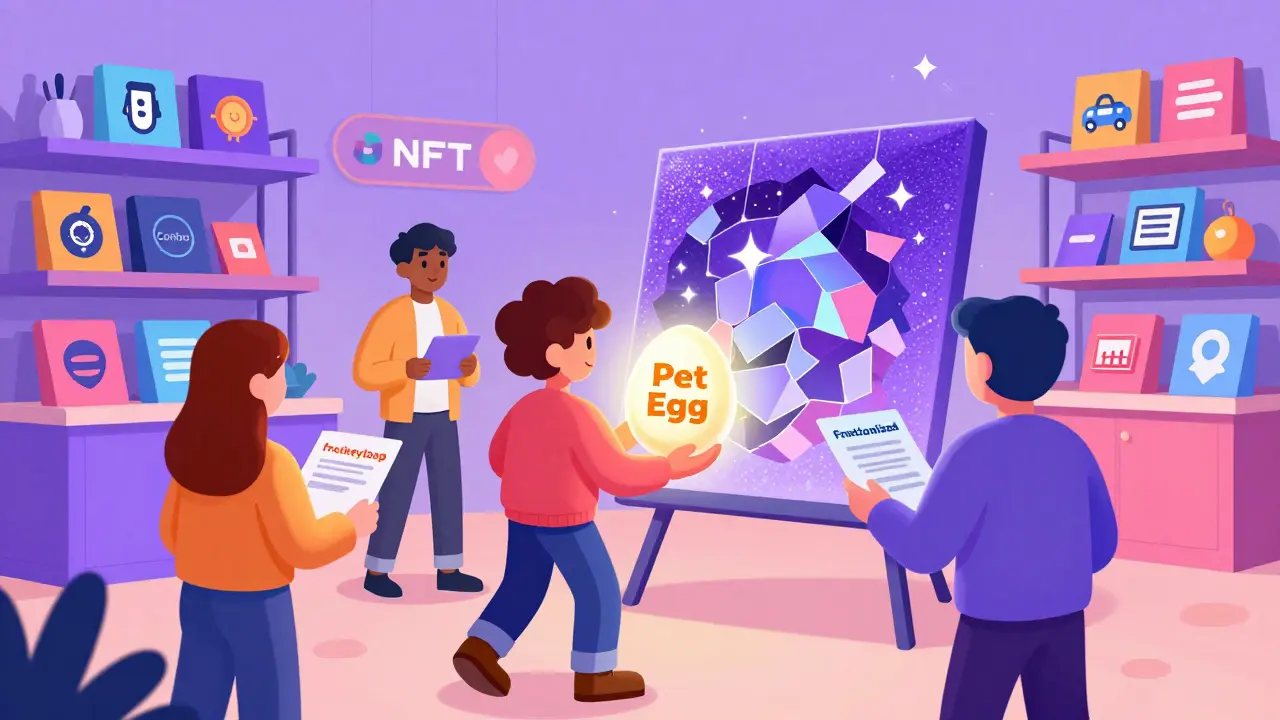
- NFT Marketplace: Buy, sell, and create NFTs. BakerySwap was the first curated NFT marketplace on BSC. It features unique mechanics like "Combos" (bundles of NFTs) and "Pet Eggs" (lower-cost NFTs that can be used in mini-games).
- NFT Fractionalization: A newer feature allowing users to convert whole NFTs into fungible tokens. This lets people buy a "share" of a high-value NFT rather than paying the full price, increasing liquidity for digital art and collectibles.
The BAKE Token: Governance and Rewards
The entire ecosystem runs on the BAKE token. It is a BEP-20 governance and utility asset. Understanding BAKE is critical because you cannot fully participate in the platform without it. Here is how it functions:
- Governance: Holders vote on proposals that shape the future of the protocol, such as fee structures or new feature integrations.
- Fee Distribution: BAKE holders receive 0.05% of all platform trading fees, distributed proportionally. This gives you a direct claim on the DEX’s revenue.
- NFT Payments: Most curated NFT drops and purchases in the BakerySwap Supermarket require payment in BAKE.
- Staking Rewards: You stake BAKE to earn more BAKE or other incentives from specific farms.
As of July 1, 2026, the market price of BAKE sits at approximately $0.0007, with a 24-hour trading volume under $100,000. This indicates low speculative interest compared to major DeFi tokens like CAKE or UNI. For investors, this means high volatility and lower liquidity, which can make entering and exiting large positions difficult without slippage.
How to Use BakerySwap: Step-by-Step
Getting started is straightforward if you already have a crypto wallet. There is no registration page, no email sign-up, and no password to remember. Your security depends entirely on your private keys.
| Step | Action | Details |
|---|---|---|
| 1 | Set Up Wallet | Install MetaMask or Trust Wallet. Configure it to connect to the BNB Chain network. |
| 2 | Fund Wallet | Buy BNB (BEP-20) on a centralized exchange and withdraw it to your wallet address. You need BNB for gas fees. |
| 3 | Connect | Go to the official BakerySwap website and click "Connect Wallet." Approve the connection request in your wallet popup. |
| 4 | Trade or Farm | Select "Swap" to trade tokens, or go to "Earn" to provide liquidity and farm BAKE rewards. |
Note: The interface is not beginner-friendly. If you have never interacted with a decentralized application (dApp), the terminology (slippage, LP tokens, impermanent loss) can be confusing. Take your time reading the tooltips and guides provided by Binance Academy or Zipmex before locking up significant capital.
Security Risks and Scam Warnings
This is the most important section of the review. BakerySwap is a legitimate protocol, but it has been plagued by impersonation scams. Because it is non-custodial, there is no central body to reverse transactions if you are hacked.
Phishing Sites: Scammers frequently create fake websites that look identical to BakerySwap. They promote these sites on YouTube and social media with promises of unrealistic returns, such as "718% APR." These numbers are impossible on the real platform. Always double-check the URL. The official site is typically linked from verified sources like CoinGecko or the BNB Chain official documentation.
Wallet Security: Users have reported losing tens of thousands of dollars to keyloggers after interacting with malicious links. Never download unofficial apps claiming to be BakerySwap. Only use the web-based dApp or trusted mobile wallets like Trust Wallet.
Audit Transparency: As of late 2025, ICO Rankings noted a lack of prominently publicized third-party smart contract audits compared to blue-chip protocols. CoinGecko lists conflicting security scores for the project (one at 77%, another at 41%), highlighting uncertainty in its risk profile. While the code is open-source, the absence of recent, comprehensive audit reports from firms like CertiK or Trail of Bits means you are relying on community scrutiny rather than professional validation.

BakerySwap vs. Competitors
Why choose BakerySwap over PancakeSwap or Uniswap? It comes down to niche focus. PancakeSwap dominates BNB Chain with massive liquidity and a broader range of features. Uniswap leads on Ethereum with deep institutional trust. BakerySwap occupies a smaller space focused on NFT integration.
| Feature | BakerySwap | PancakeSwap | Uniswap |
|---|---|---|---|
| Primary Chain | BNB Chain (Multi-chain expansion) | BNB Chain | Ethereum (and L2s) |
| Daily Volume | ~$50,000 (Modest) | $100M+ (High) | $500M+ (Very High) |
| NFT Focus | High (Curated marketplace, fractionalization) | Medium (General marketplace) | Low (Basic NFT support) |
| Fees | Low (BNB Chain gas costs) | Low (BNB Chain gas costs) | High (Ethereum gas costs) |
| Best For | NFT collectors, altcoin explorers | General DeFi traders, yield farmers | Institutional traders, ETH natives |
If you are looking for deep liquidity to trade large amounts of Bitcoin or Ethereum stablecoins, BakerySwap is not the right tool. Slippage will eat your profits. However, if you are hunting for obscure BEP-20 gems or want to experiment with NFT-Fi strategies like staking NFTs for yield, BakerySwap provides tools that larger competitors ignore.
Is BakerySwap Worth Using in 2026?
BakerySwap is not dead, but it is not a mainstream powerhouse either. It serves a specific audience: those who value creativity in DeFi and want to bridge the gap between token trading and NFT ownership. The introduction of NFT fractionalization and multi-chain capabilities shows the team is actively developing the protocol to stay relevant.
However, proceed with caution. The low trading volume means you may face poor pricing on less popular pairs. The lack of fiat on-ramps means you must already hold crypto to enter. And the persistent threat of phishing scams requires you to be vigilant about every link you click.
For experienced DeFi users willing to navigate a complex interface and manage their own security, BakerySwap offers interesting opportunities. For beginners looking for a simple way to buy crypto, stick to centralized exchanges until you understand how wallets and gas fees work.
Is BakerySwap safe to use?
The protocol itself is non-custodial and permissionless, meaning you control your funds. However, safety depends on your actions. There are many fake websites and phishing scams targeting BakerySwap users. Always verify the URL, never share your seed phrase, and be wary of offers promising unrealistic APYs. The platform lacks prominent recent third-party audits, which adds a layer of technical risk.
What is the BAKE token used for?
BAKE is the native governance and utility token of BakerySwap. It is used for voting on protocol changes, paying for NFTs in the marketplace, and staking to earn rewards. Additionally, BAKE holders receive a portion of the platform's trading fees, providing a passive income stream proportional to their holdings.
Can I buy BAKE directly with USD?
No, BakerySwap is a decentralized exchange and does not offer fiat on-ramps. You must first buy BNB or USDT on a centralized exchange like Binance or Coinbase, transfer it to a compatible wallet (like MetaMask), and then swap it for BAKE on the BakerySwap platform.
How does BakerySwap compare to PancakeSwap?
PancakeSwap has significantly higher trading volume, deeper liquidity, and a larger user base. BakerySwap is more niche, focusing heavily on NFT integration, fractionalization, and curated collections. If you prioritize low slippage and high liquidity, choose PancakeSwap. If you are interested in NFT-Fi hybrids and smaller altcoin projects, BakerySwap may offer better opportunities.
What are NFT Combos and Pet Eggs?
These are unique NFT features within the BakerySwap ecosystem. Combos are bundles of high-tier NFTs that cost several thousand dollars in BAKE. Pet Eggs are lower-cost NFTs that can be used in mini-games and also earn BAKE rewards while held. They represent the platform's attempt to gamify DeFi and increase NFT utility beyond simple ownership.
Does BakerySwap charge trading fees?
Yes, like most AMMs, BakerySwap charges a small trading fee on each swap. This fee is distributed to liquidity providers and BAKE token holders. There are no withdrawal fees charged by the platform itself, but you will always pay network gas fees on the BNB Chain for every transaction.